The Queens Pioneer
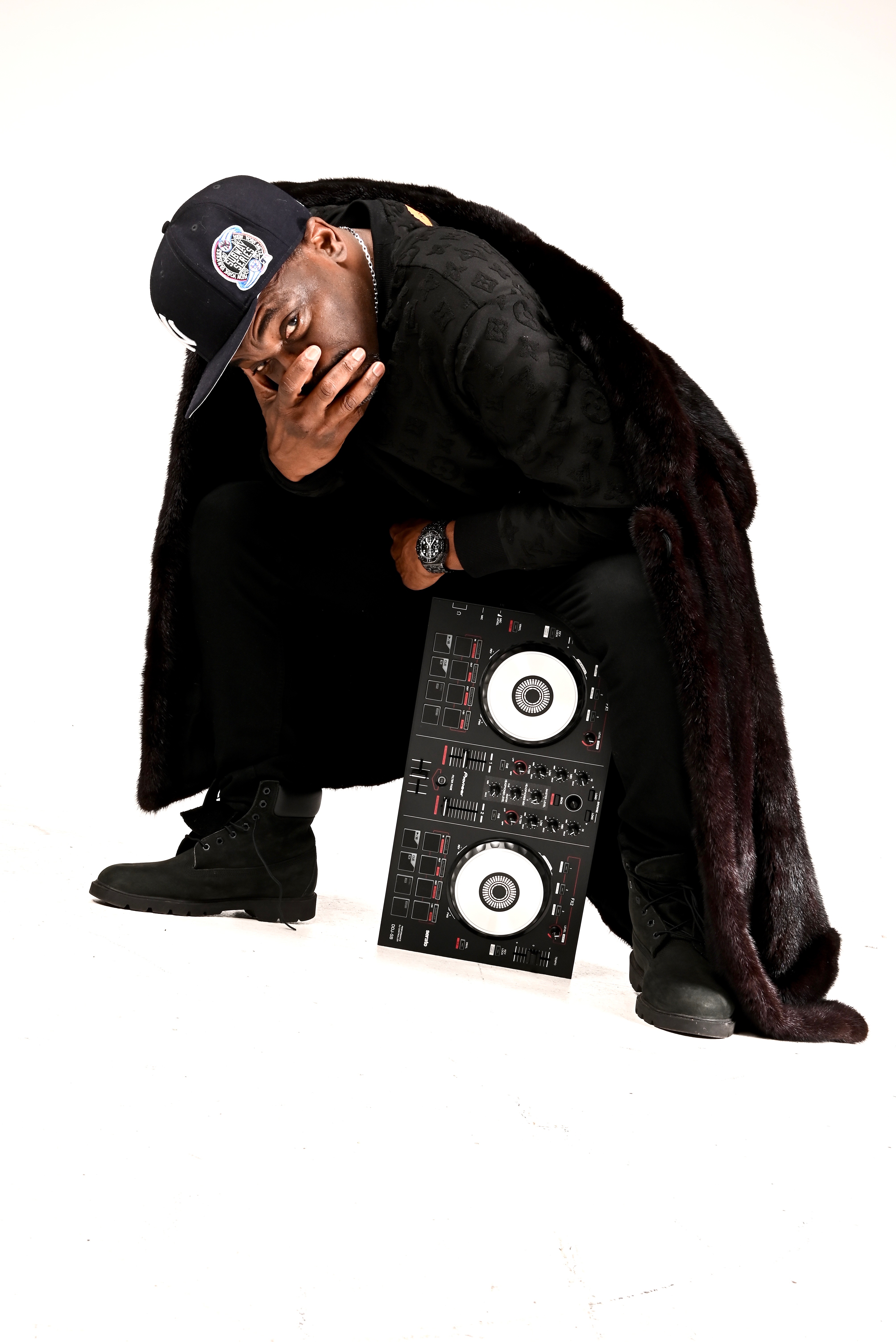
Before Queens had a seat at Hip-Hop's table, Glenn "Sweety G" Toby was building one.
Born in Brooklyn and raised in Queens, Toby emerged in the late 1970s as one of the borough's first emcees to command respect across all five boroughs — at a time when the culture's center of gravity sat firmly in the Bronx and Harlem. Battling in schoolyards, rocking park jams, and moving through the legendary five-borough circuit shaped by Mike & Dave Productions of Harlem, Sweety G earned his name on stages that included Harlem World and Club Fantasia, sharing bills and building history alongside Grandmaster Flash and The Furious Five, Kurtis Blow, Doug E. Fresh, Biz Markie, Kool Moe Dee and the Treacherous 3, The Crash Crew, Cold Crush Brothers, Fearless Four, Dr. Jekyll and Mr. Hyde, Positive K, Spyder D, Jimmy Spicer, and Kool Kyle The Starchild.
His style set him apart: fast, battle-tested, and musically fearless. While most emcees stayed locked to break beats, Sweety G rhymed melodically over R&B grooves — an innovation his peers credit with opening the lane later traveled by Stetsasonic, Heavy D & The Boyz, and generations of melodic rappers since. As Daddy-O of Stetsasonic put it: anybody who ever rhymed melodically over R&B owes something to Sweety G. Grandmaster Caz of the Cold Crush Brothers names him among the first artists out of Queens to make noise — before Run-D.M.C. — clearing the way for the borough's takeover of the culture.
The House Music Era
After a decade at the forefront of Hip-Hop, Toby stepped away from the spotlight following the passing of his grandmother. He took a corporate job, bought a keyboard, and taught himself to play, sing, and program synthesizers and sequencers — a period of reinvention that would define the rest of his career. He returned to music by building Studio 05A in Queens Village with his brother Randall Toby, a room that drew Run of Run-D.M.C., Melba Moore, members of Luther Vandross's band, and a steady stream of New York's finest.
Then he made history a second time.
As the creative voice of Cultural Vibe, alongside Trinidadian producer Winston Jones, Toby helped pioneer the Afrocentric, tribal sound within New York's garage House movement. The group's 1986 anthem "Ma Foom Bey" — released on Easy Street Records and edited by the legendary Tony Humphries — became a Paradise Garage staple and an all-time House classic, still pressed, played, and revered on dancefloors worldwide four decades later. Larry Levan himself counted it among his most played and requested records. Follow-up releases including "Mind Games" and "Power" carried Cultural Vibe's message of love, healing, and positivity across the U.S. and Europe, with the group opening for Grace Jones, Chaka Khan, Bobby Brown, Bobby Womack, Gwen Guthrie, and Heavy D & The Boyz in temples of dance music from the Paradise Garage to Zanzibar to London's Ministry of Sound.
In 1989, Toby signed to Capitol Records as a solo artist under A&R executive Kenny Ortiz, contributing "Someone to Love Me" to the acclaimed Black Havana compilation. His pen and voice extended further still — writing "You're the Love of My Life" for Sybil, remixing for Motown legend Mary Wilson and R. Kelly, and voicing Victor Simonelli-produced House projects including Groove Committee and Nu Civilization, touring the world in the process.
The Power Broker
Toby's third act moved behind the scenes — and to the top of the game. As a manager and dealmaker, he guided the career of LL Cool J, discovered and developed David Banner, and brokered deals for artists including Saigon and R. Kelly. Crossing into sports, he represented more than 50 professional athletes, negotiating landmark contracts — including a reported $60 million deal for NFL All-Pro Asante Samuel — and working alongside icons including Bernard Hopkins and Don King.
The Legacy
Through it all, Toby never forgot the boy who once came home to find his family evicted, their belongings in the street — the teenager who knew homelessness firsthand. In 1998 he founded The Book Bank Foundation, a nonprofit devoted to eradicating illiteracy and homelessness, delivering books, food, clothing, mentorship, and hope to underserved children and families through chapters across the country. That mission became personal literature with his children's book Lil' G Faces the Brooklyn Bully (2012), drawn from his own childhood, and reaches its fullest expression in his Amazon #1 bestselling book, The Rhythm of Revenue: The Mr. Sweety G System for Scaling Life, Legacy, and Leadership — a battle-tested blueprint forged at the crossroads of Hip-Hop culture, high-stakes business, and relentless reinvention.
From subway stations to boardrooms, from park jams to the Paradise Garage, from managing legends to building a legacy of giving — Dr. Glenn "Mr. Sweety G" Toby is living proof that the culture's original architects never stopped building.